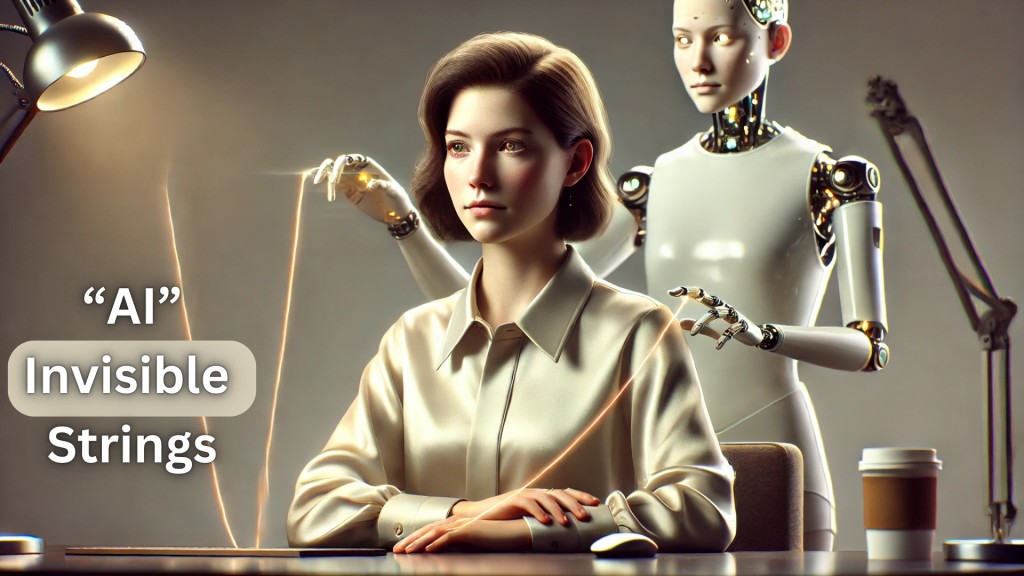
The advent of artificial intelligence marks a pivotal moment in human history—a departure from the era where humans held the reins of their creations. Unlike past technological revolutions, AI introduces a form of intelligence that operates beyond human comprehension, challenging our notions of control, accountability, and agency. This shift is not merely about automation; it’s about entrusting critical decisions to systems that we cannot fully understand, let alone scrutinize.
The Unseen Hand of AI in Workforce Decisions
In the realm of work and hiring, AI’s influence is profound and growing. Companies increasingly rely on AI-driven algorithms to screen résumés, conduct initial interviews, and even make final hiring decisions. A report by the Harvard Business School in 2022 found that 88% of employers use AI in some form during the hiring process1. While these systems promise efficiency and objectivity, they often operate as “black boxes,” offering little transparency into how conclusions are reached.
Consider the case of Amazon’s AI recruiting tool developed in 2014, which was later abandoned after it was found to be biased against female applicants2. The AI system, trained on data from previous successful hires (who were predominantly male), learned to penalize résumés that included the word “women’s” or names of all-women’s colleges. This example underscores the challenges of relying on opaque AI systems in hiring and the potential for perpetuating existing biases.
The Lure of Convenience and the Decline of Critical Scrutiny
Human nature tends toward cognitive ease; we prefer convenience over the rigors of critical analysis. As AI systems handle an ever-increasing volume of decisions—from curating news feeds to determining creditworthiness—there’s a growing temptation to accept these outputs without question. A study published in the Journal of Experimental Psychology in 2020 indicated that individuals are more likely to trust recommendations from AI systems when under time pressure, often without critically evaluating the information3.
This complacency is particularly dangerous in high-stakes environments like hiring and business partnerships, where unexamined AI decisions can entrench biases and stifle innovation. Research by the Royal Society in 2018 demonstrated that AI recruitment tools could inadvertently filter out candidates with non-traditional career paths, thereby reducing organizational diversity and missing out on unique skill sets4.
Opaque Motivations and the Challenge of Trust
In political spheres, we have witnessed how fake news and clickbait can sway elections, manipulating public opinion with minimal resistance. The Cambridge Analytica scandal revealed in 2018 highlighted how data analytics and algorithmically targeted content could influence voter behavior5. In such cases, the human actors behind misinformation had discernible motives, allowing for skepticism and counteraction.
However, when AI algorithms influence outcomes in hiring and business partnerships, the motivations become too complex for us to perceive or challenge. Algorithms optimize for patterns and correlations that may not align with human values or ethical considerations. For instance, if an AI system learns that successful employees often come from certain universities, it might favor candidates from those institutions, inadvertently discriminating against equally qualified candidates from different backgrounds—a phenomenon observed in a 2020 study by the Institute for Ethical AI & Machine Learning6.
The Decoupling of Ownership and Control
Traditionally, ownership implied control. Owning a factory meant controlling its outputs. In the AI era, this relationship is blurred. Companies may own AI technologies, but their ability to predict or direct AI behavior diminishes as systems become more complex and autonomous. This decoupling is unprecedented and disrupts established business models and regulatory frameworks built around controllable assets.
A notable example is the 2019 incident involving Apple Card, where users reported gender bias in credit limit decisions made by the algorithm7. Despite owning the technology, Apple and its partner Goldman Sachs faced criticism over their inability to explain or control the AI’s decision-making process, underscoring the risks associated with this decoupling.
The Risk of Dependency and the Erosion of Human Skills
As AI systems take over critical functions, we risk becoming overly reliant on technologies we don’t fully understand. In hiring, this could mean losing the human touch—the ability to gauge a candidate’s potential beyond quantifiable metrics. An article in the MIT Sloan Management Review emphasized that over-reliance on AI can diminish recruiters’ skills in assessing soft qualities like creativity, adaptability, and emotional intelligence8.
Moreover, there’s a danger that the workforce will adapt to fit the AI’s criteria rather than the organization’s evolving needs. Candidates might tailor their résumés and interview responses to align with what AI systems favor, leading to a homogenization of skills and experiences. This not only diminishes individual creativity and critical thinking but also hampers organizational diversity and adaptability.
Towards a Symbiotic Future
The control we are ceding to AI is not just about delegating tasks; it’s about entrusting decisions that shape the trajectory of societies to systems beyond our full understanding. This moment demands proactive engagement and a reinvigoration of critical scrutiny. Organizations must foster a culture that values human judgment alongside AI capabilities.
Implementing AI systems that are transparent and explainable is crucial. The European Union’s Ethics Guidelines for Trustworthy AI published in 2019 emphasize the need for transparency, accountability, and human oversight in AI systems9. Companies should invest in AI literacy among employees, ensuring that decision-makers understand the strengths and limitations of the technologies they use.
Regular audits of AI decisions, especially in hiring and partnerships, can help identify and correct biases or errors. Legislative efforts, such as the proposed Algorithmic Accountability Act in the U.S., reflect a growing recognition of the need to align AI systems with human values and ethical standards10.
Conclusion: Reasserting Human Agency in the AI Era
The integration of AI into our decision-making processes offers unprecedented opportunities for efficiency and innovation. However, without careful oversight and a commitment to maintaining human agency, we risk allowing opaque algorithms to shape our societies in ways that may not align with our values or interests.
Academic and business leaders must collaborate to develop frameworks that balance AI’s capabilities with the need for transparency and accountability. By emphasizing symbiosis over control, understanding over opacity, and values over mere efficiency, we can steer the future toward a horizon where technology amplifies human potential without compromising our autonomy and ethical standards.
References
- Fuller, J., & Raman, M. (2022). Hidden Workers: Untapped Talent. Harvard Business School. Retrieved from https://www.hbs.edu/managing-the-future-of-work/Documents/hidden-workers-untapped-talent.pdf
- Dastin, J. (2018). “Amazon scraps secret AI recruiting tool that showed bias against women.” Reuters. Retrieved from https://www.reuters.com/article/us-amazon-com-jobs-automation-insight-idUSKCN1MK08G
- Logg, J. M., Minson, J. A., & Moore, D. A. (2019). “Algorithm appreciation: People prefer algorithmic to human judgment.” Journal of Experimental Psychology: General, 148(3), 411–423. https://doi.org/10.1037/xge0000505
- Royal Society. (2018). Machine learning: the power and promise of computers that learn by example. Retrieved from https://royalsociety.org/-/media/policy/projects/machine-learning/publications/machine-learning-report.pdf
- Cadwalladr, C., & Graham-Harrison, E. (2018). “Revealed: 50 million Facebook profiles harvested for Cambridge Analytica in major data breach.” The Guardian. Retrieved from https://www.theguardian.com/news/2018/mar/17/cambridge-analytica-facebook-influence-us-election
- Institute for Ethical AI & Machine Learning. (2020). Responsible AI in recruitment and employment. Retrieved from https://ethical.institute/recruitment.pdf
- Hansson, D. H. (2019). “The Apple Card is a sexist program.” Twitter. Retrieved from https://twitter.com/dhh/status/1192540900393705474
- Wilson, H. J., Daugherty, P. R., & Morini-Bianzino, N. (2017). “The jobs that artificial intelligence will create.” MIT Sloan Management Review, 58(4), 14-16. Retrieved from https://sloanreview.mit.edu/article/the-jobs-that-artificial-intelligence-will-create/
- European Commission. (2019). Ethics Guidelines for Trustworthy AI. Retrieved from https://ec.europa.eu/digital-single-market/en/news/ethics-guidelines-trustworthy-ai
- Wyden, R., Booker, C., & Clarke, Y. (2019). Algorithmic Accountability Act of 2019. U.S. Congress. Retrieved from https://www.congress.gov/bill/116th-congress/house-bill/2231