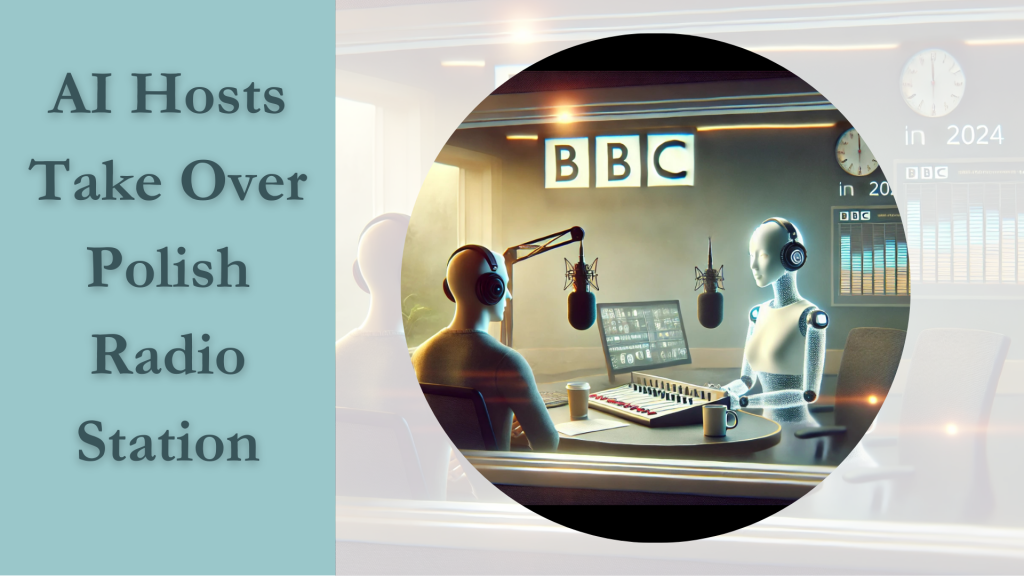
What happens when a radio station is hosted entirely by AI? In October 2024, Poland’s OFF Radio Kraków answered that question by launching an experiment: three AI-generated hosts replaced its live presenters, creating a media sensation—and a public backlash. While the experiment ended after just one week, it raises a bigger question: Which jobs can AI actually replace?
The truth is nuanced. At small radio stations, where resources are limited, the roles that can or should be automated vary. Our recent analysis of radio staffing reveals where AI is ready to step in, where it falls short, and what this means for job security in media and beyond.
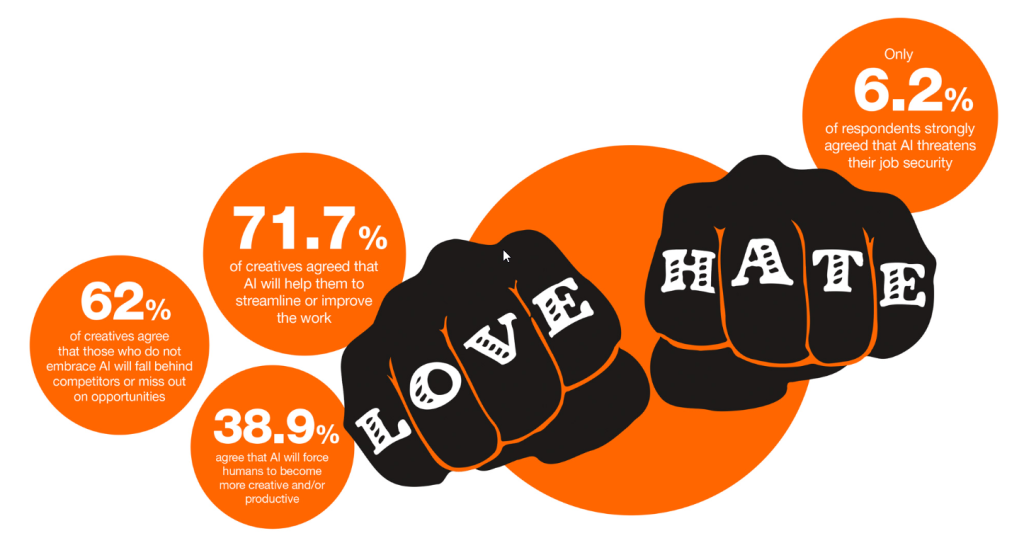
How are creatives being affected?
(c) 2024 enginecreative.co.uk/blog/artificial-intelligence-in-the-creative-industry/
Here’s what we found:
The AI Reality Check: Which Roles Could Really Go?
- On-Air DJs and Hosts AI can cover some routine segments—think song announcements or weather updates. But AI-generated voices lack the spontaneity and personality of a live host. Listeners value connection, humor, and real-time engagement, which AI still struggles to replicate (Lee, 2023, Journal of Media AI). Bottom line: For stations wanting a human touch, on-air talent is here to stay.
- Music Directors Tools like Apple Music’s algorithm-driven playlists show that AI can help with music curation. However, aligning playlists with a station’s unique brand and listener mood remains a challenge best managed by humans (Thompson et al., 2024, AI in Broadcasting).
- News Reporters and Editors AI is capable of summarizing news or compiling basic reports, but investigative journalism demands human insight. According to Forbes Insights (2023), human oversight in newsrooms prevents misinformation, ensures fact-checking, and captures depth that AI misses.
- Production Teams AI-powered audio editing tools can streamline production tasks, potentially reducing the need for large production teams. Adobe’s research (2023) suggests that AI-assisted tools can cut editing time by 50%. Yet, the creative intuition that makes a broadcast unique remains in human hands.
- Sales and Promotions Relationship-driven roles like Sales and Promotions rely on empathy and negotiation—skills AI can’t match. AI can analyze data and suggest client strategies, but high-value deals still benefit from human rapport (Kearney, 2023, AI in Marketing and Sales).
How Much Automation is Too Much?
Through varying levels of AI integration—light, moderate, and aggressive—we found that small stations could cut staffing by up to 30% without compromising essential functions. Here’s what these levels look like:
- Lightweight: AI assists in playlist curation or minor news updates, freeing time for employees.
- Moderate: AI automates repetitive DJ segments and handles basic news aggregation, reducing some roles without impacting quality.
- Aggressive: Here, AI does everything it can, with few human roles left. Yet as OFF Radio Kraków showed, listeners may not be ready for this. According to the Institute of Media Studies (2024), audience trust and engagement dropped significantly without live hosts.
What This Means for the Future of Work
As AI reshapes the media industry, job roles evolve. Automation doesn’t mean elimination but transformation—especially for jobs needing emotional intelligence, creativity, or strategic oversight.